%20(no%20fill-%20cropped).png)
The Science of Humour
- arianacahn
- Feb 3, 2021
- 2 min read

For those of you who know me, you know I like to inject a little comedy into most things I do. For those who don't know me... Welcome! I'll be your guide.
But where does comedy come from? Well, for those wanting an in-depth analysis, look no further than the Impact of Science on Society Volume XIX: The science of Humour, the Humour of Science. And for those of you who are a little bit more pressed on time, I've summarized its articles, and others, below:
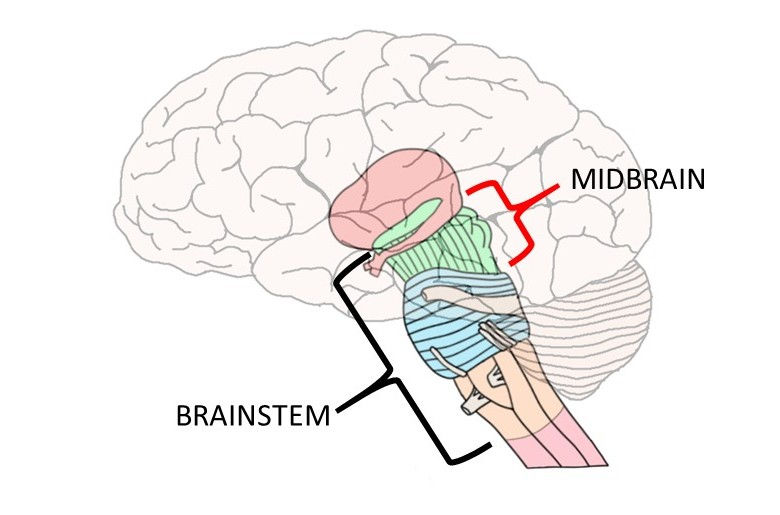
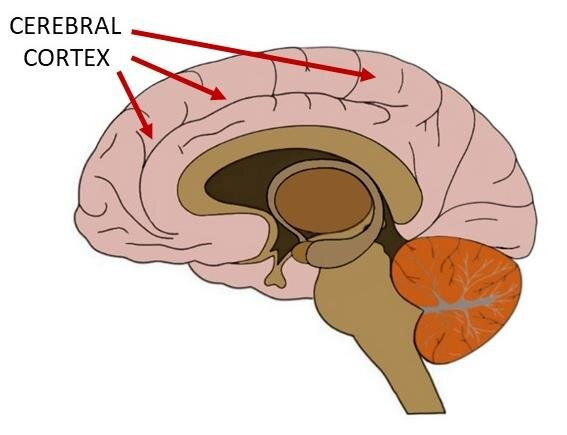
In terms of anatomy, "humour" is thought to be a pathway between higher regions of the brain - those that do the thinking/calculating/understanding - and the midbrain regions - relay regions that allow for motor output. So when the higher regions of the brain, in this instance, the "frontal lobe" (which is the region responsible for our personalities), thinks of something funny, or recognizes humour from an external perspective, information gets sent to the midbrain regions, which then allows for the expression of humour - laughter, a little tear... perhaps bending over and slapping one's knee. These integrated pathways allow for a complete understanding of a humorous situation.
A recent article in Scientific American delves into the WHY - why do humans engage in humour? Well, there are a few guesses.
First: Superiority and Relief. This reasoning states that we laugh at our past selves, or others, because we feel superior to them. "Oh, how silly I used to be as a teenager with those colourful braces", you may think. But this leads to the other part of this hypothesis - relief. We laugh at situations in order to stop feeling uncomfortable. It probably wasn't funny to be called "braceface" in at the time, but at least we can look back on it and laugh now, right?
Second: Benign Violation. This is a complicated way of saying that some sort of social rule or expectation has been broken - one that is not harmful - and finding humour in it. Perhaps you wore two differently coloured socks throughout the day, and had a private moment with yourself in the morning as you put them on, thinking about how silly you are.
Third: Evolutionary Theory. Like many things, we want to know the reason we developed a trait or lost an appendage (such as the tonsils or the treacherous appendix). In this case, it is thought that humour developed in order to form social cohesion. As it became apparent that we needed to band together as a species in order to survive, humour emerged as a way for us to share experiences, bring in partners for reproduction, and stop conflict from emerging in the group.
Finally: Spot the Mistake. When one notices incongruities that are harmless, one may find them funny. Perhaps it comes from the satisfaction of recognizing, and therefore fixing the mistake, or perhaps it is another evolutionary advantage that causes stronger social ties between band mates AKA the "Inside Joke".
This is all I've got for tonight. I'm really enjoying learning about the Science of Humour, and I hope you are too! Stay tuned for more Silly, and Serious, Science coming to you Soon!





Comments