%20(no%20fill-%20cropped).png)
The brain is complex, but learning the basics doesn’t have to be - here’s what you should know!
- arianacahn
- Feb 25, 2021
- 3 min read

Did you know that the human brain is one of the most intricate structures on the planet? This small organ that fits in your head and weighs only about 3 pounds and is approximately the size of both of your fists together. Its complexity is what lends to the common saying “Come on - it’s not brain surgery”.
The Basic Make-Up of the Brain
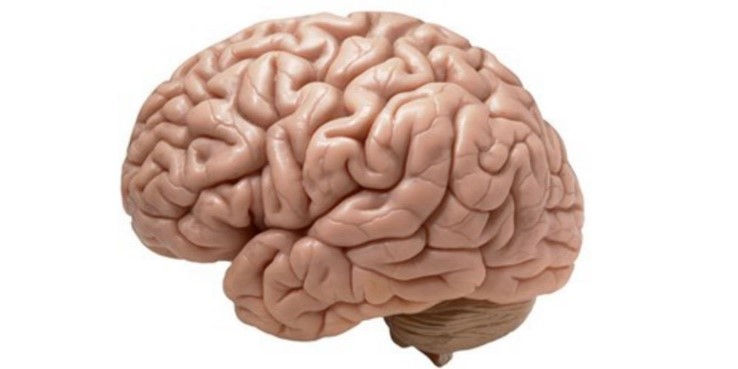
What is the reason for this complexity? Brains are made up of a variety of cells, the most common being the neuron. Neurons are cells that transmit signals from one cell to another, building pathways between brain regions. In fact, each human brain is made up of about 100 billion neurons. In order to fit all these cells into your head, multiple folds can be found on the surface of the brain, increasing the surface area of cells available. It kind of looks like a radiator, but this structure is not meant to dispel heat.

Major Brain Divisions
I keep saying “human brains”, but you might be wondering about other animal’s brains as well. Brains are made up of four primary lobes: the frontal lobe, the parietal lobe, the temporal lobe, and the occipital lobe. While humans and animals have these four lobes in common, the frontal lobe is the most developed in humans. This is the region that allows for our intelligence and our sense of self; thanks to the frontal lobe, we have personalities, imaginations and free will! The animal that has a frontal lobe most similar to that of humans is the dolphin - no wonder they’re known as some of the smartest animals!


Our other lobes are very important as well. The parietal lobe is responsible for organizing incoming sensory information, such as taste, smell and touch. The temporal lobe is largely responsible for memory and understanding of language. Finally, the occipital lobe is in charge of everything we see.
There are also smaller structures that are deeper in the middle of the brain.
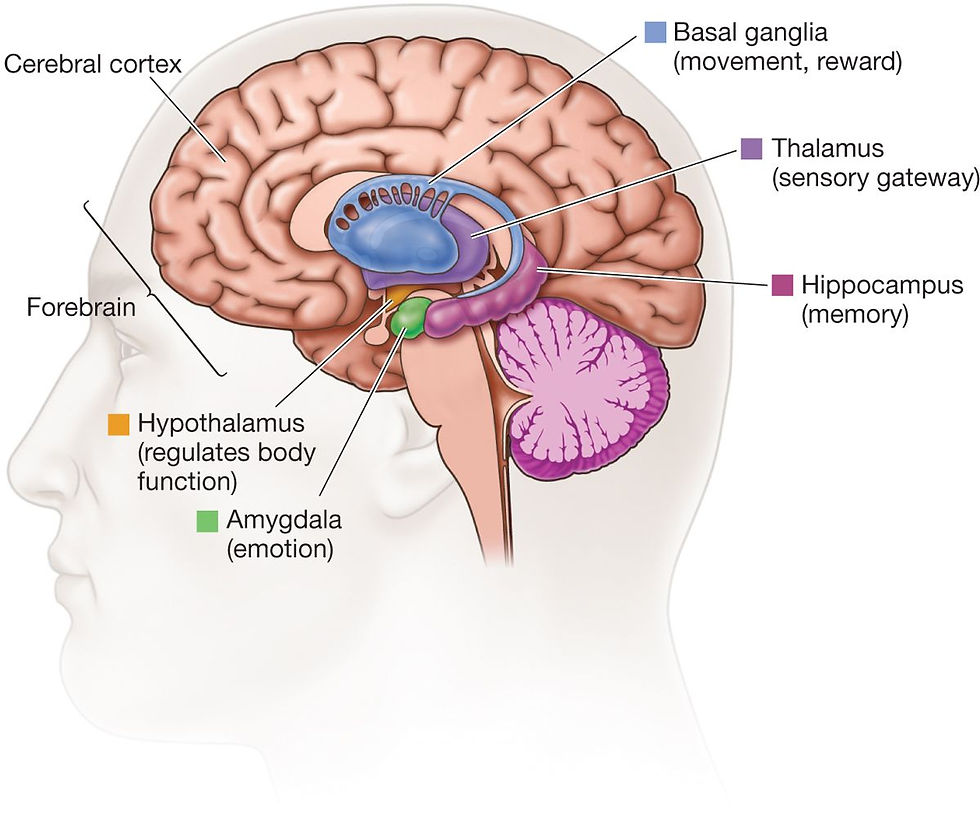
Known as “subcortical structures”, these formations are largely involved in relaying information to different parts of the brain, as well as emotion regulation. As mentioned above, the temporal lobe is important in memory - the hippocampus, which is the structure responsible for memory formation, lives there.
Common Brain Myths
You may have heard the myth of some people being more “right brained” - being more creative - while those who are “left brained” are more analytical. This is totally untrue! Functions are spread out over the two sides, or hemispheres, of the brain. Being left-handed instead of right-handed can even change the side of some functions, especially when it comes to language.

This leads me to another myth you may have heard - that you only use 10% of your brain. This, again, is totally false. Your brain is “on” in some way, all the time, even while you sleep. True, 100% of your brain isn’t activated 24/7, but functions turn on and off as you need them to, allow for the brain to conserve energy. If you only use 10% of your brain, you’d be a vegetable.
Trust me - I'm a neuroscientist!
- me, probably
I hope that this allowed you to learn a bit more about the human brain. It’s a really cool organ, which is why I dedicated myself to learning about it.
Stay tuned to my blog in order to learn more!


Comments